Rethinking National Prosperity with Adam Smith

How Trade, Not Resources, Built a Nation’s Fortune

For generations, people have been taught to assume that a nation’s promise lies hidden beneath the surface, as if prosperity were a treasure to be extracted, rather than built.
We were taught to measure national power by the size of its oil fields, iron reserves, and the richness of its land - as if a country’s balance sheet were written entirely by geological luck.
It’s a comforting idea, particularly for the resource-rich and strategically lazy. But it is fundamentally wrong.
If natural resources were the primary prerequisite for dominance, the Democratic Republic of the Congo would run global finance, and Switzerland, an Alpine state with no oil, no gold, and no coastline, would be a impoverished farming enclave.
Yet, Switzerland sits atop the global economic pyramid. Two centuries ago, it was among the poorest corners of Europe. Today, its financial institutions oversee upwards of $4 trillion in private assets, including over $2.6 trillion in offshore wealth management, making it the unquestioned capital of international cross-border wealth.
How did a country with no raw materials pull off the greatest value-creation trick in modern history?
The answer lies in a truth understood by Scottish philosopher Adam Smith in 1776, expanded by Alexander Hamilton in 1791, and demonstrated by every hyper-dominant entity since: Wealth is not a matter of possession; it is a discipline of positioning.
Adam Smith, Shakespeare, and the Illusions of Scarcity

When Adam Smith gave the world The Wealth of Nations at the dawn of the American Revolution, he launched an aggressive, intellectually devastating attack on the dominant doctrine of his day: mercantilism.
The British Empire equated national strength with the gathering of gold and protecting it like a dragon in its cave, mistaking possession for prosperity.
Smith countered with a radical alternative: gold is useless when sitting in a vault; a nation’s true wealth is its people’s ability to trade, innovate, and continuously expand their sphere of influence through commerce.
Smith’s work was counterintuitive. It defied the conventional wisdom of European court scholars who viewed economics as a zero-sum game of territorial acquisition. And despite popular myth, Smith used his famous idiom, "the invisible hand," exactly once in the entire treatise, borrowing the literary flair directly from Shakespeare’s Macbeth.
Smith understood that physical scarcity is an intellectual illusion. Resources are static; trade, specialization, and influence are dynamic. A nation does not grow dominant by holding gold; it grows dominant by creating the conditions under which global commerce must pass through its hands.
Hamilton’s Blueprint: Converting Knowledge into Capability
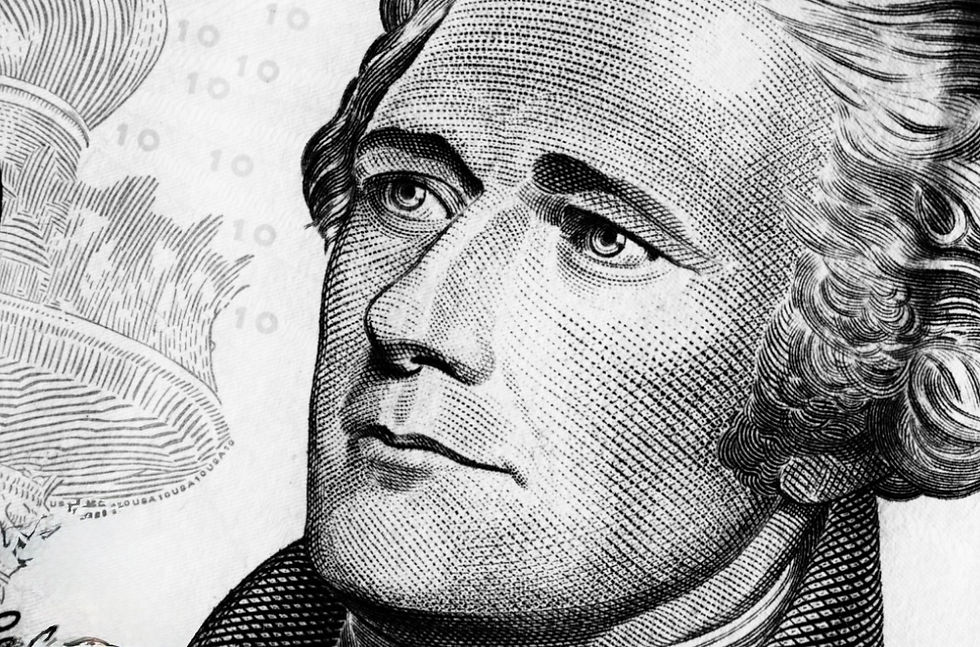
Across the Atlantic, a young United States was listening.
In 1791, Treasury Secretary Alexander Hamilton delivered his iconic Report on Manufactures. It was not merely an economic plan; it was a blueprint for transforming an agrarian, resource-vulnerable republic into an industrial sovereign.
Hamilton saw clearly what many modern leaders still miss: Nations do not become powerful merely by possessing natural resources; they become powerful by converting knowledge into capability.
Under Hamilton’s vision, the young American republic actively acquired foreign intellectual property, recruited master craftsmen, replicated machinery, and built an ecosystem that rewarded relentless experimentation. He recognized that regulations and supply constraints were not insurmountable barriers to market fit—they were simply structural variables to be engineered around. Industrial capacity was not just business; it was sovereignty.
Centuries later, that same dynamic plays out in high-stakes fields like artificial intelligence, space infrastructure, autonomous systems, and advanced robotics. The modern battleground isn't over who owns the oil; it's over who controls the intellectual architecture that powers the global economy.
The Swiss Masterclass: Three Pillars of Manufactured Dominance
Which brings us back to Switzerland.
Lacking the natural riches of its neighbors, Switzerland abandoned the geological lottery entirely and built its modern prosperity on three deliberate, strategically engineered pillars:
Institutional Discretion as an Asset Class: In 1934, Switzerland codified modern banking privacy into federal law. While other jurisdictions treated financial privacy as a side effect, Switzerland turned trust and discretion into a core global service, capturing the largest concentration of private capital in history.
Strategic Neutrality as Financial Calculation: Neutrality was never passive isolationism; it was an active economic posture. By standing apart from European conflicts, Switzerland preserved its infrastructure and balance sheets while the continent rebuilt. Post-war Europe did not just trust Switzerland with its money, it needed Switzerland’s capital to rebuild itself.
Hyper-Specialized Human Capital: Rather than competing in mass labor, Switzerland engineered a world-class system of specialized technical education. Instead of drowning in generalists, it cultivated elite watchmakers, precision engineers, chemical specialists, and private bankers. The result? Swiss workers earn nearly four times the European average because their output sits at the absolute top of the value chain.
The Personal Playbook: Positioning Over Possession
What applies to nation-states applies with equal force to businesses, and professionals.
The ultimate lesson of Switzerland, Adam Smith, and Alexander Hamilton is simple:
You do not need an abundance of raw capital to win.
Treat what you have as a legacy in the making: In business, preservation is the first act of creation.
Avoid unnecessary confrontation: Stay out of low-leverage conflicts that exhaust your energy without building equity.
Develop irreplaceable specialization: Acquire specific, rare capabilities that the global market cannot easily replicate.
In business and in statecraft, dominance belongs to those who build the network, design the rules, and master the exchange.
Real national wealth is the sum of our collective prosperity: the jobs created, the businesses launched, the opportunities unlocked for every citizen.
About the Author

As the resident strategist for Citizen Financial Center and The Business Club, Elena Keith covers the intersection of success and the economy, banking and the art of wealth-building, guiding business leaders through the inner circles of commercial banks, Private Equity, and family offices.
From the International Monetary Fund boardrooms to the corridors of Capitol Hill, Elena brings clarity to the business world, operating on the principle that finance is at its best when it is practiced with kindness.


"An inquiry into the Nature and Causes of the Wealth of Nations" was published in 1776, the same year as the Declaration of Independence